-
Le Notti delle Stelle, LA NOTTE DI SAN LORENZO A VICO EQUENSE, 10 agosto 2009
AstroCampania Associazione, Sezione Stabia - Penisola Sorrentina, con il patrocinio dell'Unione Astrofili Italiani
Propone il 10 Agosto 2009 La Notte delle Stelle.
Serata osservativa delle stelle cadenti di San Lorenzo.
Serata pubblica con osservazioni delle stelle cadenti, del pianeta gigante Giove e dei suoi satelliti, della Luna e delle meravigliose nebulose e ammassi stellari del cielo estivo.
La serata inizia con una videoproiezione che illustrerà la volta celeste e il fenomeno delle perseidi, a seguire a vostra disposizione i telescopi dell'associazione con gli esperti che vi guideranno durante le osservazioni.
Luogo svolgimento: piazzola del belvedere presso il Bar del belvedere
Piazzale dei Capi 1, Monte Faito Vico Equense (Napoli)
Dalle ore 20.30
fonte astrocampania
more

-
Luca Carboni A Montemiletto (AV), 7 agosto 2009
Luca Carboni torna in tour con "Musiche ribelli", disco in cui rende omaggio alla grande canzone d'autore degli anni 70. Si tratta di canzoni pescate dal repertorio del cuore del cantautore bolognese: si va da De Gregori a Guccini, da Dalla a Finardi, passando anche per un brano completamente lontano come "Up patriots to arms" di Franco Battiato.
MONTEMILETTO, Piazza 4 novembre - Montemiletto (Av)
Ore 21. Ingresso gratuito
fonte 2night
more

-
Il Concerto Di Cesare Cremonini A Montoro Superiore (AV), 7 agosto 2009
Dopo il successo del tour invernale, Cesare Cremonini porta nelle piazze storiche d'Italia il suo "Tour sulla luna" durante tutta l'estate.
Forte del successo e dei consensi ottenuti prima con la pubblicazione dell'album "Il Primo Bacio Sulla Luna" e dopo con la pubblicazione del libro "Le Ali Sotto Ai Piedi", il cantautore bolognese proporrà un tour ricco di successi ma anche di perle musicali, spaziando dal mondo del rock a quello del jazz, toccando delicate atmosfere cantautorali per un concerto capace di mantenere lo spettatore sempre attento e coinvolto.
VILLA COMUNALE
Montoro Superiore (Av)
Ore 21. Ingresso gratuito.
fonte 2night
more

-
XV Sagra dello Gnocco, dal 06/08/2009 al 09/08/2009, Taurano (AV)
Il 06/07/08/09 agosto 2009 a Taurano CON INIZIO ALLE 20:30 si terrà la SAGRA DELLO GNOCCO , XV edizione, anno dopo anno ha visto crescere il numero delle presenze fino a raggiungere le 8000 persone circa per l'edizione n°14 del 2008. La Sagra si svolge nel piazzale antistante del convento S.Giovanni del Palco.
La sagra di Taurano non è solo degustazione degli ottimi prodotti tipici (pane casereccio, salumi, formaggi,gnocchi,panini,stoccafisso contorni dolci) è buona musica, ma anche cultura, con le visite guidate del Convento e della vicina villa romana del I sec A.C.
E allestita anche una fiera mercato dove è possibile prenotare spazi.
Dietro la sagra c'è l'impegno dei ragazzi della Pro Loco e di tutti i tauranesi che si organizzano molti mesi prima per far rendere al meglio le serate.
La sagra oltre che bontà è anche una ottima occasione per sfuggire alle afose città e godersi la frescura con oltre 800 posti ristoro
Le Serate saranno allietate da buon vino, birra, tanta musica con liscio, karaoke, latino-americano, e sopratutto i prodotti tipici
Per informazioni: 3290071208 / 0818240280
ore 20:00
fonte sagreinitalia
more

-
Andrea Bocelli Premiato A Capri, 25 agosto 2009, Capri
Talk show, live e filmati dell'artista il 25 agosto al Premio Faraglioni
L'artista italiano più amato nel Mondo. Una voce potente, straordinaria ed inconfondibile che riesce a trasmettere grandissime emozioni toccando il più profondo del cuore". Con questa motivazione nella spettacolare cornice della Certosa S. Giacomo di Capri, Andrea Bocelli riceverà il Premio Faraglioni 2009, giunto alla sua XVI edizione.
Dopo aver appreso la motivazione di questo prestigioso omaggio artistico, il Maestro ha dichiarato: "La fiducia, l'affetto della gente, sono la mia forza, la ragione prima del mio costante peregrinare per il mondo. Le ragioni di tanta stima sono e rimarranno misteriose, mentre intatta, fino all'ultimo concerto, resterà la volontà di dare sempre il meglio di me, a costo di qualunque sacrificio".
Alla Serata di Gala della Premiazione Ufficiale del Premio Faraglioni 2009, condotta da Paola Saluzzi, interverranno note personalità del mondo dello spettacolo e della cultura ed alte cariche istituzionali. Il programma annuncia una proiezione delle tappe fondamentali della carriera di Andrea Bocelli, un'intervista, una performance, un talk show con il pubblico e la consegna ufficiale del Premio.
Dalle 21.30
CERTOSA DI SAN GIACOMO
Via Certosa, Capri (NA)
Info: 081 8377877
fonte 2night
more

-
Villa Celimontana Jazz 18|06 – 20|09 2009, Roma
Al via la 16esima edizione di Villa Celimontana, il Festival del Jazz di Roma e importante realtà italiana. Come sempre si svolgerà nella splendida cornice della omonima villa situata sul colle Palatino a due passi dal Colosseo nel cuore di Roma. La villa offre uno scenario suggestivo e sarà la giusta cornice al genere musicale per me tra i più colti e generosi della storia della musica. Colto perchè non può non esserci cultura, studio e approfondimento se si vuole fare del jazz. Generoso perchè è sempre capace di offrire a chi ascolta delle grandissime emozioni. Nonostante la annunciata crisi, Villa Celimontana offre un programma degno di nota e di attenzione. Iniziamo subito nei primi giorni con musicisti di grandissimo livello, come il violinista romeno, Alexander Balanescu, il pianista argentino Natalio Mangalavite, un tributo a Ezra Pound - Ezra Weston Loomis Pound (1885 – 1972) poeta statunitense che visse per lo più in Europa e fu uno dei protagonisti del modernismo e della poesia di inizio XX secolo, che vedrà la presenza di artisti italiani di grandissimo livello e raffinatezza, quali Aldo Bassi, Paolo Recchia, Gianni Savelli e tanti altri, guidati da Riccardo Biseo e con la partecipazione di Giorgio Albertazzi, come voce recitante. Novità di questa edizione sarà la presenza nel corso dei mesi delle Scuole di musica e dei Conservatori più importanti italiani, ai quali Villa Celimontana ha voluto dare uno spazio per rappresentare le realtà emergenti del panorama jazzistico italiano. In particolare merita una nota la rassegna GIOVANI TITANI, coordinata dal trombettista Massimo Nunzi, per tre settimane, fine giugno, fine luglio e fine agosto, durante le quali vedremo sul palco del festival i giovani talenti – appunto i Titani – di cui sentiremo parlare un domani. Dalle ore 23 con ingresso gratuito, sarà possibile assistere a questi spettacoli che, già è stato annunciato, saranno poi raccolti in un best-off CD che vuole dare dare la giusta visibilità a chi fatica ad emergere.
"Sarebbe bello per un anno riuscire a vedere in una sola volta, riuniti all'interno di una rassegna dedicata, tutti i Jazzisti di Roma, una piccola 'grande' comunità molto viva che anima i nostri inverni nei locali romani del jazz, ma che a Villa Celimontana spesso fatica ad esserci".
Sono sicura che la saggia direzione artistica di Villa Celimontana ci riserverà ancora qualche sorpresa relativa alla programmazione di Luglio e Agosto, che presto pubblicheremo su Romsalive. Buon Festival a Tutti gli amanti del jazz!!
fonte: romalive
more

-
Engl - 87th Opera Festival dell’Arena di Verona from 19 june to 20 august 2009, Rome
The famous opera festival boasting one of the most breathtaking settings in the world presents five different operas and a gala evening with tenor Placido Domingo to celebrate the 40th anniversary of his debut in the Arena. Some of the singers to look out for this year include Giovanna Casolla, Fiorenza Cedolins, Daniela Dessì, Marianne Cornetti, Fabio Armiliato, Marcello Giordani and Ruggero Raimondi. The operas are Carmen by Bizet in the production by Franco Zeffirelli, with renewed sets. Domingo conducts the first four performances and Julian Kovatchev all the others. Then comes Aida by Verdi with a production directed by Gianfranco De Bosio inspired by the first stage design of Aida in 1913 and with Daniel Oren on the podium. Rossini's Il Barbiere di Siviglia is conducted by Antonio Pirolli and directed by Hugo de Ana, who is also stage and costume designer. The last opera is Tosca by Puccini, again a production entrusted to Hugo de Ana. On the podium is Pier Giorgio Morandi.
fonte: wantedinrome
more

-
Engl - Sotto il cielo stellato di Villa Torlonia from 7 july to 9 august 2009, Rome
Organised by the Associazione Il Tempietto, the same organisation that produces the "Notti Romane al Teatro di Marcello" festival, this event has a programme similar to Teatro di Marcello's, with chamber music and recitals. Concerts take place in the lovely setting in front of the recently restored Casina delle Civette every evening beginning at 20.30. Villa Torlonia, Via Nomentana 70.
fonte: wantedinrome
more

-
Engl - Macerata Opera Festival from 23 july to 9 august 2009, Rome

This excellent opera season takes place in the fascinating setting provided by the "Sferisterio", a long, oval shaped arena that was originally built as a playground for the game of the ball and the bangle. The very peculiar shape of the building was carefully designed to encompass all the needs of the sport activities which were popular in the first half of the 18th century, but in fact provides a challenging setting for stage directors who have turned it into a temple for opera with some really legendary productions. The programme this year includes Don Giovanni, Madama Butterfly and La Traviata alongside a programme of concerts and conferences, and the opera Il Trionfo del Tempo e del Disinganno by Handel at the Auditorium S. Paolo.
fonte: wantedinrome
more

-
Engl - Belcanto Festival from 16 to 26 september 2009, Rome
16-26 Sept 2009. This is the second edition of the Academy of S. Cecilia's end-of-summer festival dedicated to Belcanto - "the beautiful singing voice and smooth vocal style associated with 18th and early 19th century professional singers and designed to show off the singer's voice". The programme is dedicated to the triumvirate of early 19th century Italian melodrama: Bellini, Donizetti and Rossini. Events to look out for include a recital by bass Michele Pertusi featuring Rossini's arias for bass (18 Sept) and a concert performance of his masterpiece The Journey to Rheims conducted by Kent Nagano (21, 23 Sept). However, the varied programme also features a concert by the Carabinieri Band with the Accademia di S. Cecilia Choir (20 Sept), and an evening of jazz improvisation by pianist Danilo Rea of famous operatic melodies (16 Sept).
fonte: wantedinrome
more

-
Engl - Monuments of Capri
The excavations have brought to light many cisterns used to receive water. Hotels have been built on these ruins especially in Marina Grande, and the same Casa di Pisco in Calcare has been erected on the ruins of an old cistern. From an artistic and historical point of view Palazzo a Mare is very interesting. This was one of the residences of the emperor Cesare Ottaviano who named the isle "city of doing sweet nothing". Today only a few ruins can be admired because the Austrian Hadrawa plundered the Palace of its artistic goods and because the French during the XVIII century transformed the Palace in a blockhouse during the war against the English. From Palazzo a Mare it is possible to reach the so called Bagni di Tiberio. After Punta di Gramola there is the wonderful and famous Blue Grotto with its reflections of lights and shades; the Green Grotto is fascinating, too. Among the holy buildings the most important is probably the church of San Costanzo, erected between the XI and XII century. This was Capri's cathedral until the title was assigned to the church of Santo Stefano in 1596. Near the church of San Costanzo there are the remains of the emperor Cristina's tomb. The heart of the social life in Capri is without doubt Piazza Umberto I, also known as the "Piazzetta". From here it is possible to admire a wonderful view of the Gulf of Naples, the Torre dell' Orologio, and the baroque church of Santo Stefano which contains the tomb of Vincenzo and Giacomo Arcucci and the remains of Saint Agata. From the Piazzetta it is easy to reach Palazzo Vescovile which is now the residence of the Town Hall. Other important buildings are Palazzo Cerio which houses the important library "Centro Caprese", Palazzo Bonacci and Palazzo Canale. Opposite Palazzo Cerio there are high walls which mark the fourteenth century village. Here we find the ruins of the Monastery of Santa Teresa and the church of SS. Salvatore erected during the seventeenth century. On the highest part of the village stands Castello del Castiglione. The oldest church of the village is the fourteenth century church of Sant' Anna. Along Via Tiberio we may see wonderful villas such as Villa Fersen, Villa Jovis which was the residence of the Emperor Tiberius and Parco Astorita from where the sight goes from the Faraglioni rocks to Sorrento. The Faraglioni rocks are higher than 100 metres and on one of them lives a very rare blue lizard called "scopolo". On the promontory Fasullo there is another famous villa which belonged to the writer Curzio Malaparte. Walking along Via Camerelle there is the Charterhouse of San Giacomo. It was built in 1363 by Giacomo Arcucci, who was the secretary of the Queen Giovanna Anjou. Today the charterhouse is the residence of the local library and of a high school while Sala Diefenbach has been transformed into a museum. Not far from the charterhouse there is the Park of Augustus and Via Krupp which leads to one of the best known beaches of Capri: Marina Piccola.
fonte: islandcapri
more

-
Engl - History of Capri
Just off the coast of Naples and Salerno, between Cape Miseno and Amalfi, a great rock soars like a dream lost in the cobalt blue sea that surrounds it. This Mediterranean jewel, yearned for and exalted in some of the world's most famous lyric poetry, is the island of Capri. The intoxicating fragrance of flowers, delicate splashes of colour, recollections of a millennial past and a peaceful charm, shattered only by the shrill cry of seagulls, are just some of the magical qualities of this mythical isle. Caesar Augustus was the first to discover the charm of Capri when he visited the island in 29 BC. So taken was he with the island's beauty that he traded the nearby fertile Ischia for it with the city of Naples. This marked the beginning of Augustan rule. He was subsequently followed by his successor Tiberius who embarked on an intense building program between 27 and 37 AD, resulting in the construction of 12 villas. The first inhabitants to settle in Capri were the Greek "Teleboi" who came to the island in the VIII Century BC. Today, only the fortified walls of an ancient Greek acropolis still survive as testimony to their presence on the island. In 1906 a local doctor, Ignazio Cerio, uncovered the remains of a number of prehistoric animals and stone weapons during excavation work undertaken to expand the Quisisana Hotel. According to some scholars, the etymology of the name Capri may be traced back to the Greek word Kapros (wild boar). Others believe instead that Capri is derived from the Latin word Capreae (goats). The island extends over an area of 12 square kilometres and is 3 kilometres wide. The great political events that unfolded in Naples with the consecutive rise to power of the Angevin, Aragonese, Spanish and Bourbon dynasties between the VIth and XIXth Centuries, had few repercussions on the island itself. Exposed to the threat of Muslim attack, and left to fend for themselves, the islanders' best defence was to flea their homes around the Marina and take refuge in the uplands. With few natural resources and a population decimated by pirate raids and pestilence, the plight of the islanders was further exacerbated in the Seventeenth and Eighteenth Centuries by the rivalry that emerged between the island's two Communes, Capri [pag. 8] and Anacapri [pag. 18] , regarding their respective civil and ecclesiastic rights of jurisdiction. Following the last heroic disembarkation on the island, the French completed the island's fortifications and remained there until the fall of Napoleon and the restoration of the Bourbons in 1815. It was only then that Capri finally emerged from its long hibernation, ready to embrace the romanticism of the Nineteenth Century. It was in fact during this time that the island's magical solitude and rustic simplicity first began to attract visitors, and soon became the favourite seasonal haunt and residence of foreign artists, writers and poets. In 1826 Hotel Pagano, the island's first hotel, welcomed the German writer Augustus Kopisch. But it wasn't until after the Russian-Japanese war of 1905 and the great exodus of Russian intellectuals, that Capri really established itself as a literary and political refuge. It was about this time that Maxim Gorki also arrived in Capri where he was warmly embraced into the island's cosmopolitan life. Amongst contemporary writers, two in particular enjoy pride of place in the island's literary annals: the Swede Axel Munthe and the island's own Edwin Cerio.
fonte: capri.net
more

-
Praiano
Praiano, l'antica "Plagianum" e "Pelagianum", nota perche' "i dogi con le loro corti vi si recavano in villeggiatura per goderne l'aria pura e la quiete paradisiaca", e' un centro di pescatori in gran parte disseminato sopra un dorsale scendente dal monte S. Angelo a Tre Pizzi verso il Capo Sottile. Aggregata a Praiano, re Carlo I d'Angio'"levar volee ad onore di Università"e successivamente lo stesso "fe' costruire ivi nel luogo denominato la sciola, una torre per custodia e difesa del litorale da legni nemici". "Principali capi d'industria eran quivi ne' secoli passati l'arte della seta e quella del filato o filo sottile ritorto finissimo, quivi imbiancato e lavorato dalle donne del paese... Non meno antica e lucrosa era eziando l'industria e la pesca del corallo".Di notevole interesse e' la chiesa parrocchiale di S.Luca Evangelista, dove si conserva una reliquia del Santo, un suo busto d'argento del 1694 e tele attribuite al cinquecentesco pittore Giovanni Bernardo Lama: La Madonna col Bambino e i SS. Luca e Francesco di Paola sull'altare, la Madonna del Carmine nell'ultima cappella della navata destra e la Circoncisione nell'ultima cappella della navata sinistra . Di Padovano di Montorio e' la Madonna del Rosario datata 1572 in una cappella a destra dell'altare. L'interno, restaurato nel 1772, e' a tre navate divise da pilastri che reggono archi a tutto sesto. La navata centrale e' coperta da volta botte unghiata mentre le laterali - aventi sei cappelle per parte - da volte in crociera in stucco. Unico esempio in costiera e' rappresentato dall'innesto di una cupola direttamente sull'abside. Interessanti sono il pulpito ligneo con pitture rappresentanti S. Pietro e S. Paolo, e l'altare maggiore in maiolica settecentesca come il pavimento e dove sono raffigurati uccelli, fiori, volute e in un tondo S. Luca mentre dipinge. A destra della chiesa e' il campanile a tre piani di cui l'ultimo con monofore che con la sua pesante struttura sembra vigilare come una torre difensiva sullo intero villaggio.
fonte: praiano
more

-
Engl - History of Minori
Minori has Roman origins. It was first called "Reginna", then "Reginna Minor" since near it there was a bigger town called "Reginna Maior". During Middle Ages Minori had an important shipyard that produced galleys until 1039. Since 987 it had been made a diocese by Pope John XV and was an Episcopal seat until 1818. It rivalled Amalfi because of its picturesque location, its factories, its orange blossoms: the doges of Amalfi often stayed there and some of them are buried in the Cathedral. An important event is the imprisonment by Salernitano prince Guaimario IV of the second bishop of Minori, Sergio. On April, the 11th, 1597 there was a tragic storm. In 1492, 1528 and 1656 there were several plagues that brought in the town death and terror. The plague of 1656 made 355 people die: it was a third of the population.
fonte: minori.starnetwork
more

-
Engl - Creator Vesevo - Lava in a permanent from 18 june 2008 to 31 december 2009, Ercolano
A symbolic lieu, religious and scientific, world known, a magical part of Europe's identity, the Vesuvius isn't anymore a "sterminator" but a creator that rise from the lava's natural compressions. For the first time in the vulcano's history ten european artists carve mount Vesuvius lava to realize an opera intended to stay for a long time along the road that leads to this great site.
fonte: in-campania
more

-
Engl - Naples: return to the baroque from 1 december 2009 to 31 may 2010, Naples
This exhibit represents a glance at painting in Naples, from BAttistello Caracciolo to De Mura, twenty-five years after the laudable exhibit, 17th Century Civilisation. It is a cross-section of Baroque and late-Baroque aimed at recovering new aspects of this period, as represented in Naples, and, primarily, presenting a series of works of art that were not displayed in the previous exhibits.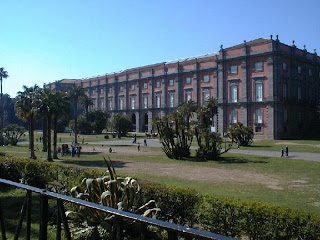
fonte: in-campania
more

-
Elton John In Piazza Del Plebiscito A Napoli, 11 settembre 2009
Venerdì 11 settembre, in ricordo delle vittime delle Torri Gemelle.
Elton John Torna a Napoli dopo 36 anni dalla sue esibizione del 1973. Sarà suo il grande concerto della Festa di Piedigrotta, in programma dal 3 al 13 settembre. Si esibira' in Piazza del Plebiscito il prossimo 11 settembre, una data che non e' stata scelta a caso ma che è tesa a ricordare e onorare la memoria delle vittime dell'attentato alle Torri Gemelle.
PIAZZA DEL PLEBISCITO, Napoli
Info: 0814107211
fonte 2night
more

-
Engl - Les Ballets Jazz de Montrèal in 9 august, Ravello
Aszure Barton draws inspiration from the forthright personalities of her dancers, and leaves them room to display their talent, so that the essence of the performance derives from an individual exploration of the artistic experience. Her choreography involves combining her approach with the habits and personal styles that she has observed in the performers. This production takes a collective approach to the theme of courage. It plays on the force of the group, and also on the refusal of an individual to submit to constrictions imposed by the tribe. The quest for and affirmation of the self cannot come about unless each individual finds the courage to take the first step. Formed in 1972, BJM Danse owed its existence to Geneviève Salbaing, with the support of co-founders Eva Von Gencsy and Eddie Toussaint. The current Artistic Director Louis Robitaille, appointed in 1998, has created a showcase for new talents and a new generation of choreographers, notably the two that have been in residence with the company, Crystal Pite and Aszure Barton. Among collaborators we can mention Patrick Delcroix, Dominique Dumais, Nicolo Fonte, Shawn Hounsell, Trey McIntyre, Mia Michaels amd Rodrigo Pederneiras. Aszure Barton is Artistic Director of Aszure & Artists, founded in 2002. She has created choreographies for such artists and dance companies as Mikhail Baryshnikov, Hell's Kitchen Dance, Benjamin Millepied & Company, Hubbard Street @, Transitions Dance Company, The Juilliard School and BJM Danse. She is currently artist in residence at the Baryshnikov Arts Center, New York.
fonte: ravellofestival
more

-
Il Musical Dei Pink Floyd Al Teatro Dei Templi, Welcome to the Machine, 22 agosto 2009, Capaccio (SA)
Musical psichedelico dedicato alla rock band più famosa di tutti i tempi. Welcome to the Machine racconta la storia di Syd Barrett, primo leader del gruppo, attraverso i ricordi degli altri componenti. Dagli inizi della carriera al declino e al crollo psicologico schiacciato dai meccanismi dello showbiz, Barrett diviene l'emblema di un artista che sceglie di dare libero sfogo alla propria creatività. Un concerto-spettacolo in cui musica, danza e una spettacolare grafica si fondono per creare una sensazionale miscela.
TEATRO DEI TEMPLI
Via Magna Grecia 169
Capaccio (SA)
Info: 081/2295545
fonte 2night
more

-
Gianni Lamagna In Concerto A Napoli, 05/08/2009
Gianni Lamagna con l'ensemble "Diagonale" presenta "Di Mare e di Amori". Le passioni, la storia, gli autori, i musicisti, il tempo, gli stili e le forme della canzone napoletana riletti e interpretati dalla voce colta e popolare di Gianni Lamagna, capace di attraversare le anime diverse della canzone, facendola vibrare di armonici vocali che evocano suoni arcaici e contemporanei.
MADRE, Via Luigi Settembrini, 79 - Napoli
Info: 08119313016
Ingresso euro 10.
fonte 2night
more
